Dining Table Size Guide: What Size Table Do I Need?
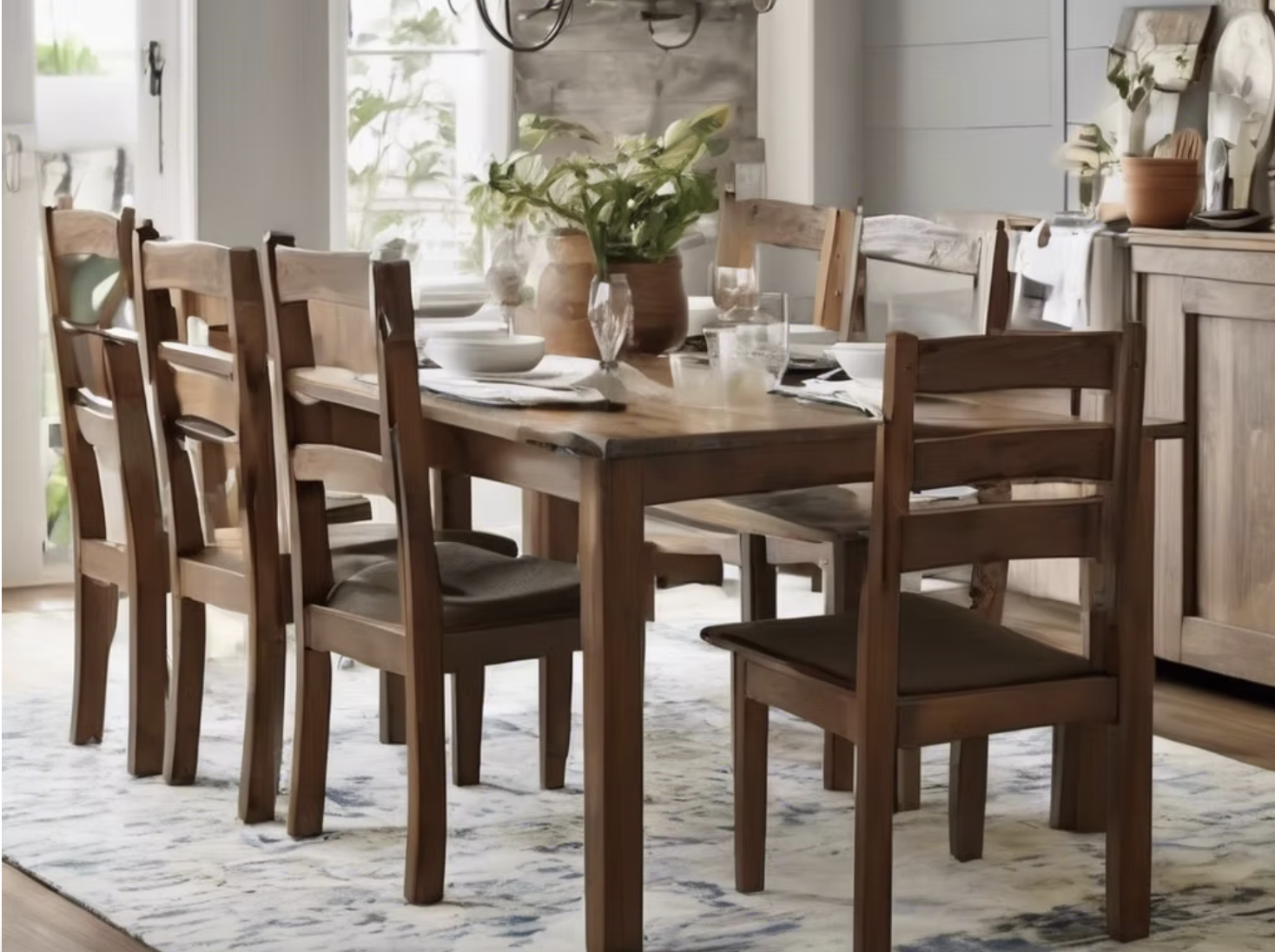
Choosing the right dining table size is essential for creating a functional, comfortable, and stylish dining space. Whether you have a cozy corner in your kitchen or a spacious dining room, understanding how to pick the perfect table ensures that your gatherings with family and friends are enjoyable.
This guide will take you through the step-by-step process of selecting the ideal dining table size for your home. We’ll explore dining table shapes, how to measure your space, and the seating capacities of different table sizes. By the end, you’ll have all the tools you need to make an informed choice.
Why Does Dining Table Size Matter?
The dining table is more than a piece of furniture; it’s the centerpiece of your home. It’s where you gather for meals, share stories, and host celebrations. However, its size and shape directly impact functionality and aesthetics.
Here’s why getting the size right is critical:
It ensures enough room to dine comfortably.
It balances your space for a visually pleasing look.
It accommodates guests effectively, avoiding overcrowding.
Now, let's take a closer look at how to determine which dining table size is best for your space.
1. Start With Your Space
The first step is evaluating the size and layout of your dining area. Your dining table needs to seamlessly fit into the room without making it feel cramped or overcrowded.
How much space do you need around the table?
To ensure comfort and flow:
Minimum clearance for tight spaces: Leave 80–100 cm (31–39 inches) between the table edge and walls or furniture to allow people to sit and push their chairs in.
Comfortable clearance: For better movement, aim for 100–125 cm (39–49 inches) between the table and surrounding obstacles.
Doorways: If your dining room connects to another space, allow at least 125 cm (49 inches) between the table and doorways for easy access.
Space-saving tips
If space is limited:
Opt for chairs without armrests; they can be pushed in fully when not in use.
Consider benches or banquette seating, which take up less room than individual chairs.
Pro Tip: Use newspapers to map out the table shape and size on your floor. This will help you visualize how much space the table will occupy and how much room you’ll have left to walk around it.
2. Choose the Best Table Shape for Your Room
The shape of your table should complement the proportions of your dining area. Here's a quick guide to help you decide:
Rectangular Tables
Best for: Long, narrow rooms or spaces.
Why choose this shape? Rectangular tables are versatile and the most common dining table shape. They can seat large groups when extended with leaves, while still being practical for everyday use.
Space Tip: Ensure there’s at least 80 cm (31 inches) clearance on all sides for movement.
Round Tables
Best for: Small spaces or square rooms.
Why choose this shape? Round tables create a cozy, intimate setting where everyone is equally engaged in the conversation. They’re also great pairings for banquette or corner seating.
Considerations: Larger round tables can make it harder to reach across or interact with those sitting on the opposite side. These work best for 2–8 people.
Square Tables
Best for: Square-shaped rooms or multifunctional spaces.
Why choose this shape? Square tables create symmetry and ensure everyone feels equally included. They're an excellent option for adding balance to combined dining/living rooms.
Oval Tables
Best for: Medium to large dining rooms.
Why choose this shape? Oval tables combine the elegance of round shapes with the practicality of rectangular ones. They’re ideal if you want a standout piece that feels a little less traditional.
3. Understand Dining Table Standard Sizes and Seating Capacities
Now that you have an idea of your space and table shape, it’s time to explore standard table sizes and how many people each can typically seat.
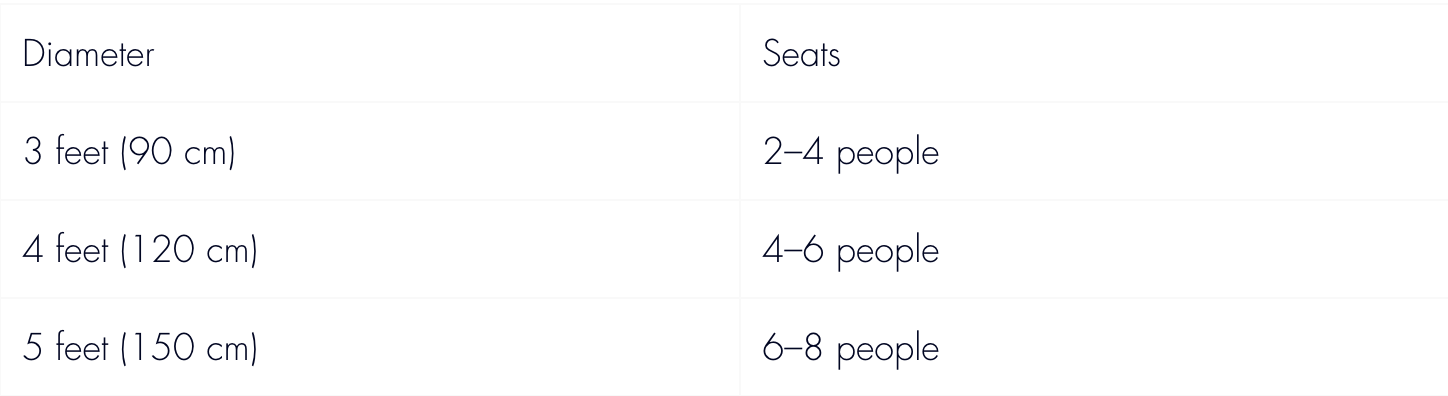
Round Dining Table Sizes
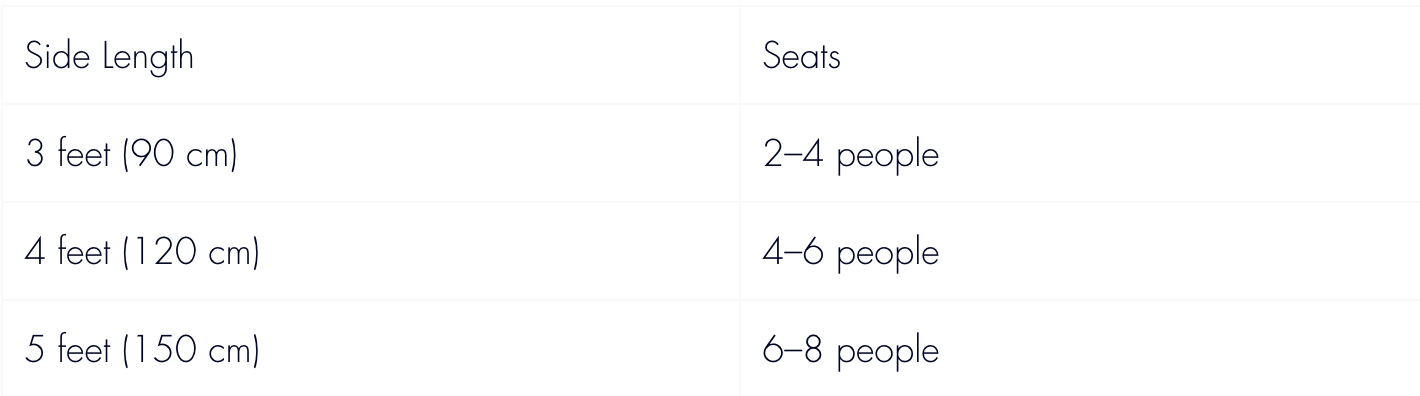
Square Dining Table Sizes
Oval Dining Table Sizes
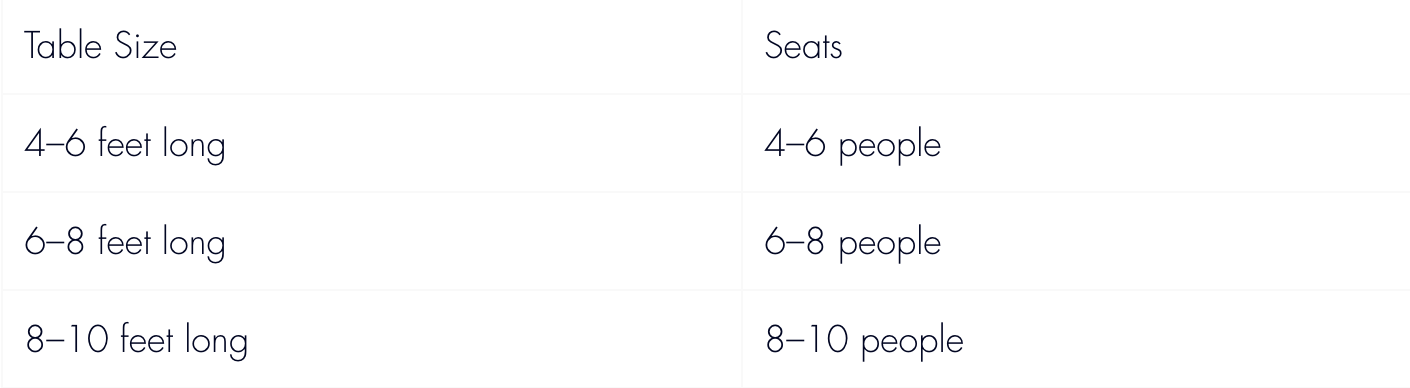
Knowing these general guidelines will ensure that your table comfortably accommodates your household and guests.
4. Customizing for Flexibility
For some spaces, standard dining table sizes simply won’t suffice. This is where custom or extendable tables can be a game-changer.
Why choose an extendable table?
Maximize space during everyday use.
Accommodate additional guests on special occasions.
Switch seamlessly between different table shapes (e.g., round to oval, square to rectangular).
Customizing a table also ensures it complements unique dining spaces and meets your seating requirements perfectly.
5. Don’t Forget Functionality and Style
Functionality
Think about how you'll use your table:
Frequent family dinners? Look for durable materials like oak or walnut.
Hosting events occasionally? Opt for stylish pieces with high seating capacities.
Style
Your dining table should enhance your home’s overall vibe. A sleek, minimalist design can complement modern spaces, while rustic wooden tables bring charm to traditional interiors.
Create Your Perfect Dining Space Today
Choosing the right dining table size is all about balancing practical needs with the style of your home. By considering your room size, layout, and table shape, you can find the perfect fit that’ll enhance your dining experience.
Still unsure? Consider going bespoke! A custom-made dining table ensures perfect proportions and unique design.
Happy dining!
